
Why So Many Retaining Walls Start Leaning After a Few Years
Why So Many Retaining Walls Start Leaning After a Few Years
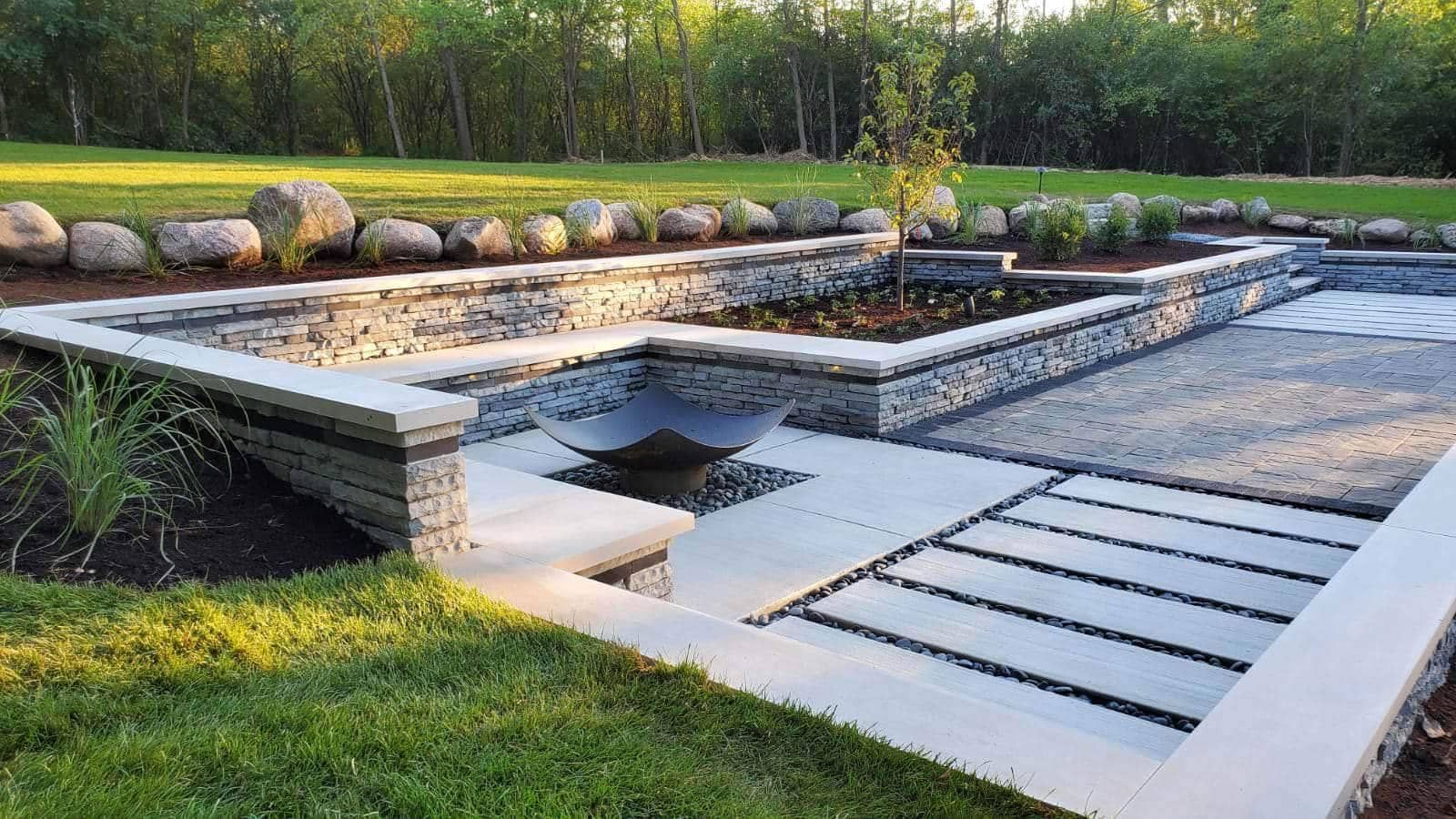
Drive through almost any suburb in the Midwest and you will see them. Tumbled block retaining walls. Raised patios. Seat walls. Garden borders. And if you look closely, many of them are already leaning, separating, or bowing outward like they are slowly trying to escape the yard.
The blocks being used are typically small dimensional units, often around 12 by 8 by 4 inches. They were originally intended for light garden walls and planting beds under two feet high. They are easy to stack, easy to cut, and they line up perfectly no matter how you turn them. That convenience is exactly why they are everywhere.
The problem is not that the blocks are evil. The problem is how they are used. These systems were never designed to hold significant load or support taller retaining conditions without proper engineering. Yet you will see them stacked three, four, even five feet high because they are affordable and simple to install. Add Midwest freeze thaw cycles and clay soil, and gravity eventually wins.
Then there is the base. Many of these walls are set on a few inches of gravel and leveled carefully on day one. It looks straight. It photographs well. Everyone is happy. Four to six years later, the wall begins its slow lean. Without a concrete footing or proper structural preparation, settling is almost guaranteed. The wall does not collapse dramatically. It just tilts enough to quietly bother you every time you look at it.
The irony is that these walls are often chosen to save money. They are marketed as the economical option. And they are. Up front. But rebuilding a leaning wall costs more than building it correctly once. Still, many homeowners accept the trade off because the initial price feels good in the moment.
There is nothing wrong with choosing affordable solutions. But understanding what a material was actually designed to do matters. A wall meant for a flower bed should not be asked to perform like structural architecture. Gravity has a way of enforcing that lesson over time.